How Aircraft Brokers Evaluate the True Cost of Ownership Before Buying an Aircraft
July 17, 2026
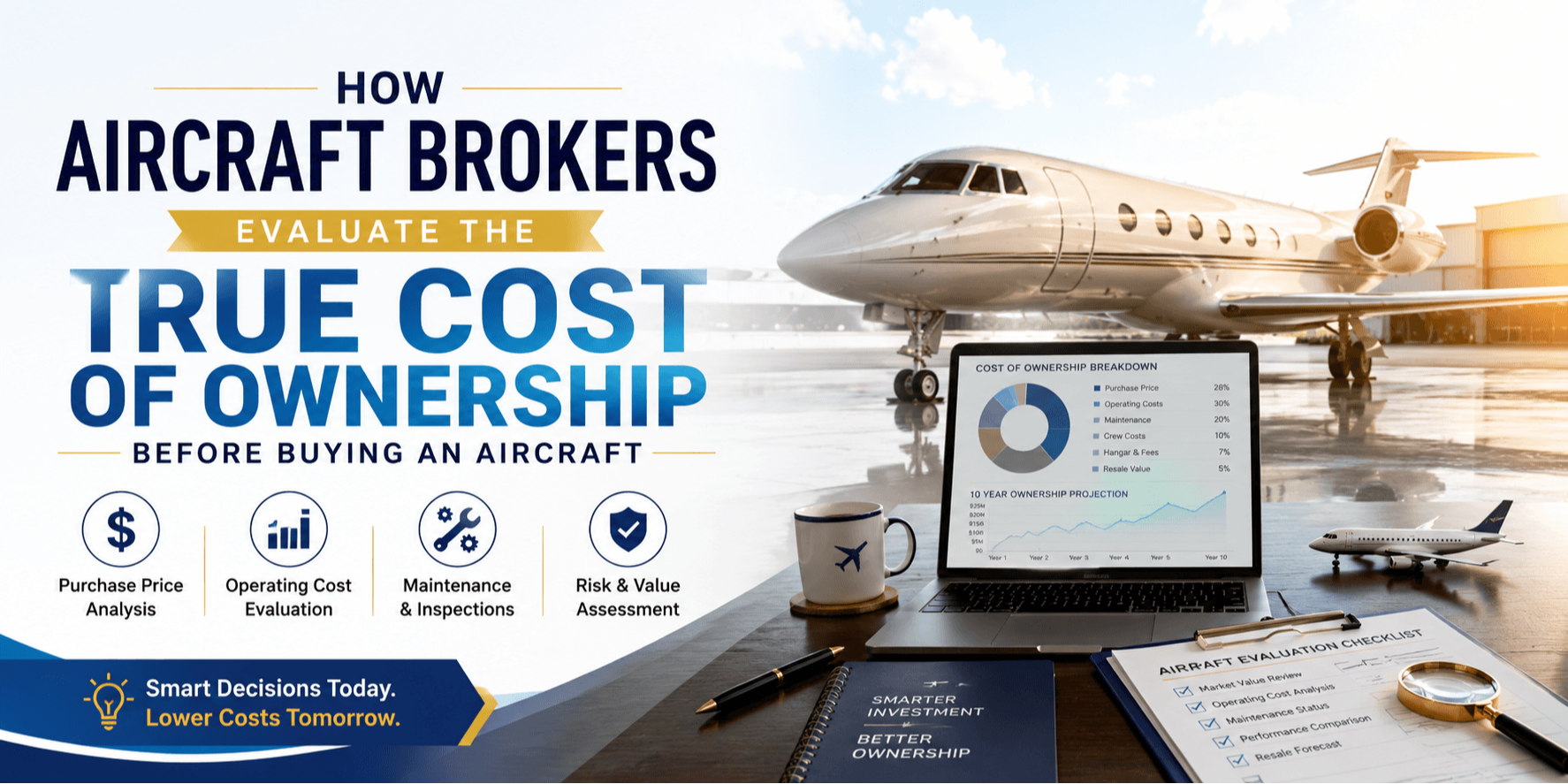
Purchasing an aircraft is an investment, but the purchase price is one component of the financial picture.Fuel, maintenance, crew, insurance, hangar fees, inspections, financing, and depreciation all contribute to the true cost of ownership.
Those buyers who already know how to deal with the costs of buying an aircraft know that paying attention not to these ongoing costs and working out their expenses will bring on surprise bills long after the plane arrives.
This is why professional aircraft brokers complete a thorough cost analysis before recommending any aircraft to those involved in maintenance.
Whether you are buying your first business jet, enlarging your fleet or even comparing different air vehicles, the total cost of ownership helps to make a good bet for it.
Why Does Total Ownership Cost Matters?
Two aircraft can have equal purchase price, yet very different operating costs.
For instance, an aircraft might:
Burn significantly more fuel
Require more frequent maintenance
Pay higher insurance premiums
Have extra crew members
Experience greater depreciation
Without considering these factors, aircraft buyers might select an aircraft that will cost much more in the future than expected.
What Aircraft Brokers Evaluate Before Recommending an Aircraft
Professional airplane brokers don’t just match buyers with available aircraft. They look into the long term cost-benefit analysis of ownership.
They evaluate these as the key ones.
1.Acquisition Cost
The purchase price is its starting point.
The brokers then compare, in terms of:
Market values
Condition
Maintenance history
Upgrades
Avionics
Return potential of possible future resale
possible future resale of the aircraft, in a manner that shows it as a good-value asset.
2.Annual Operating Costs
The costs of operating differ by aircraft type and annual utilisation.
These commonly include:
Fuel
Engine reserves
Maintenance
Parts replacement
Landing fees
Navigation charges
Crew salaries
Training
Insurance
Hangar rental
Familiarity with these recurring costs helps buyers to set realistic annual budgets.
3. Maintenance Requirements
Maintenance is the largest single expense of ownership.
Aircraft brokers review:
Scheduled inspections
Engine overhaul schedules
Component life limits
Airworthiness directives
Maintenance tracking records
Unexpected maintenance expenses can have a material impact on the overall ownership budget.
4.Aircraft Utilisation
The number of hours an aircraft flies each year has an immediate impact on its ownership costs.
Questions brokers commonly inquire into include:
How many hours will you fly each year?
Domestic or international operations?
Owner-operated or charter?
Corporate travel or private?
The answers will affect which aircraft is the best long-term value addition.
5.Depreciation and Resale Price
An aircraft is a financial asset as well.
Experienced brokers evaluate:
Historical resale trends
Market demand
Aircraft age
Manufacturer reputation
Future market outlook
When you consider resale value that helps to protect the buyer investment.
Why Cost Analysis Is More Important Than Ever
Today's aviation market is constantly changing.
Factors such as:
Fuel prices
Parts availability
Maintenance costs
Labour rates
Insurance premiums
Financing costs
can all affect the costs of ownership.
Decisions made purely on purchase price may lead to much higher total operating expenses in the long run.
What are the Common Mistakes Aircraft Buyers Take?
Many buyers unwittingly drive their ownership costs up by:
Emphasising the price of the acquisition
Underappreciating maintenance costs
Ignoring depreciation
Choosing the wrong aircraft size
Overlooking operating costs
Relying on rough estimates instead of detailed financial analysis
The work of professional operators saves us from this expensive error.
Why Getting a Detailed Cost Analysis Is So Important for Aircraft Decisions
Buyers can analyze ownership in more detail, which helps them:
Objectively compare several airplanes
Forecast annual expenses
Know operational costs through the lifecycle
Budget more accurately
Reduce financial surprises
Choose their aircraft for their mission and budget
Buyers can base decisions on actual operating data and not just guesswork.
Why Aviation Professionals Trust Chris Doerr
Experience matters when you’re examining ownership costs of aircraft.
Chris Doerr, the founder of AviaCost, has spent decades explaining the financial implications of owned aircraft to airfield owners, operators, brokers and other aviation professionals.
Not simply an analysis of operating costs, we help you make an educated decision as to what to buy.
Instead of using run-of-the-mill calculators or generic industry averages, Chris has created cost models that account for the multitude of factors that affect the ownership of an aircraft.
This makes it possible for buyers to make a comparison between aircraft on a significant financial basis before buying a larger-ticket investment.
Regardless of whether you are buying one aircraft or running a fleet, discussing the decision to purchase your aircraft should not take place on a one-off buy-or-sell basis, and a person with knowledge of both aviation practices and ownership economics must be able to do so.
How AviaCost Helps Purchasing Aviation
AviaCost carries the cost of an aircraft out before the purchase, providing buyers the full financial picture.
Using successful methods developed by Chris Doerr, AviaCost provides you the potential for:
Compare models of aircraft
Estimate annual cost of ownership
Know direct and indirect operating expenses
Evaluate lifecycle ownership costs
Support acquisition planning
More informed purchasing decisions in future buy decisions can be better informed
Instead of wondering what it may cost to fly an aircraft and to operate it without knowing, you have real financial data that will be used as guidance for smarter investments.
AviaCost -- Making Better Choices Between Purchasing Aircraft For Your Buying Decisions
Buying an aircraft is more than just selecting the best model; the buying process requires an understanding of whether the new aircraft has fixed costs, an idea of the long-term costs associated with ownership and the risk and reward.
A well-driven cost calculation will help you avoid surprises, provide a better comparison between aircraft, and inspire you to invest.
Chris Doerr and AviaCost offer credible aircraft ownership cost analysis to facilitate rational aircraft buying decisions.
Whether you're an aircraft owner, operator, broker, or corporate buyer, Chris can make sure that you are pricing your total asset value accurately to avoid high upfront costs.
Contact Chris Doerr on AviaCost Today
Contact Chris Doerr on AviaCost today to discuss your aircraft ownership cost analysis and understand how good financial planning could get you to make the right decisions for making better decisions in aviation.
Frequently Asked Questions
Why shouldn't I focus only on the purchase price?
As ongoing costs including fuel, maintenance, insurance, crew, and depreciation typically surpass any purchase cost over the life of the aircraft.
Do you think an aircraft broker can estimate operating costs in the future?
Yes.Skilled aircraft brokers look through historical operation history, maintenance needs, usage and the market condition to calculate long-term ownership costs.
Do every plane have different ownership costs?
Yes. Absolutely. Even planes with comparable purchase costs can have wildly varying operating and maintenance charges.
Who does aircraft ownership cost analysis benefit?
Accurate cost analysis can be beneficial for:
Private owners
Corporate flight departments
Charter operators
Fleet managers
Aviation investors
Aircraft brokers
both directly and indirectly.
How should you work with Chris Doerr and AviaCost?
Chris Doerr brings several decades' aviation experience, along with specialized aircraft ownership cost analysis.
His philosophy allows buyers to see how buying aircraft ownership financially impacts them before starting to make any consideration of purchasing the aircraft.