Aircraft Fuel Cost Volatility: How Much Should You Budget for Price Swings?
September 5, 2026
If you own a private aircraft, you already know that fuel is not the only thing that keeps you up at night when you sign the purchase agreement. Hangar fees, insurance, and maintenance reserves feel much more predictable to you– you can reach out to a few suppliers and get quotes and lock in a number for the year.
Aircraft fuel cost does not work that way. It moves with global oil markets, regional supply and even geopolitical events thousands of miles from your home airport, and for most owners it’s the single most volatile line item in the entire operating budget.
Such volatility is no small inconvenience. Because fuel is priced per gallon and consumed every time the aircraft flies, even modest swings compound quickly over the course of a full flying season.
Understanding how big those swings actually get and how to budget for them -- is one of the most practical things a private owner can do to avoid an unpleasant surprise at the end of the year.
Why Fuel Behaves So Differently From Other Ownership Costs
Most aircraft ownership costs are fixed (hangar rent, insurance premiums, subscription-based maintenance programs) or semi-predictable (scheduled inspections, avionics updates).
Fuel is neither. It is a commodity price, and as a result it is subject to the same forces that drive gasoline prices at a highway pump… except aviation fuel markets are thinner, regionally fragmented and more sensitive to disruptions in refining and distribution.
And general aviation owners typically pay retail prices at fixed-base operators (FBOs) rather than the wholesale rates airlines pay.
FBO pricing includes fuel flowage fees, local taxes and handling costs in addition to the underlying commodity price and that means the price you see on the ramp can swing even more sharply than the wholesale price.
What Recent Price Swings Actually Look Like
A good way to look at it is when you look at real numbers, not at the gradual movement of fuel prices year-to-year.
Surveys of U.S. FBOs conducted by Aviation Research Group in 2026 illustrated how much month-to-month movement is typical for Jet-A:
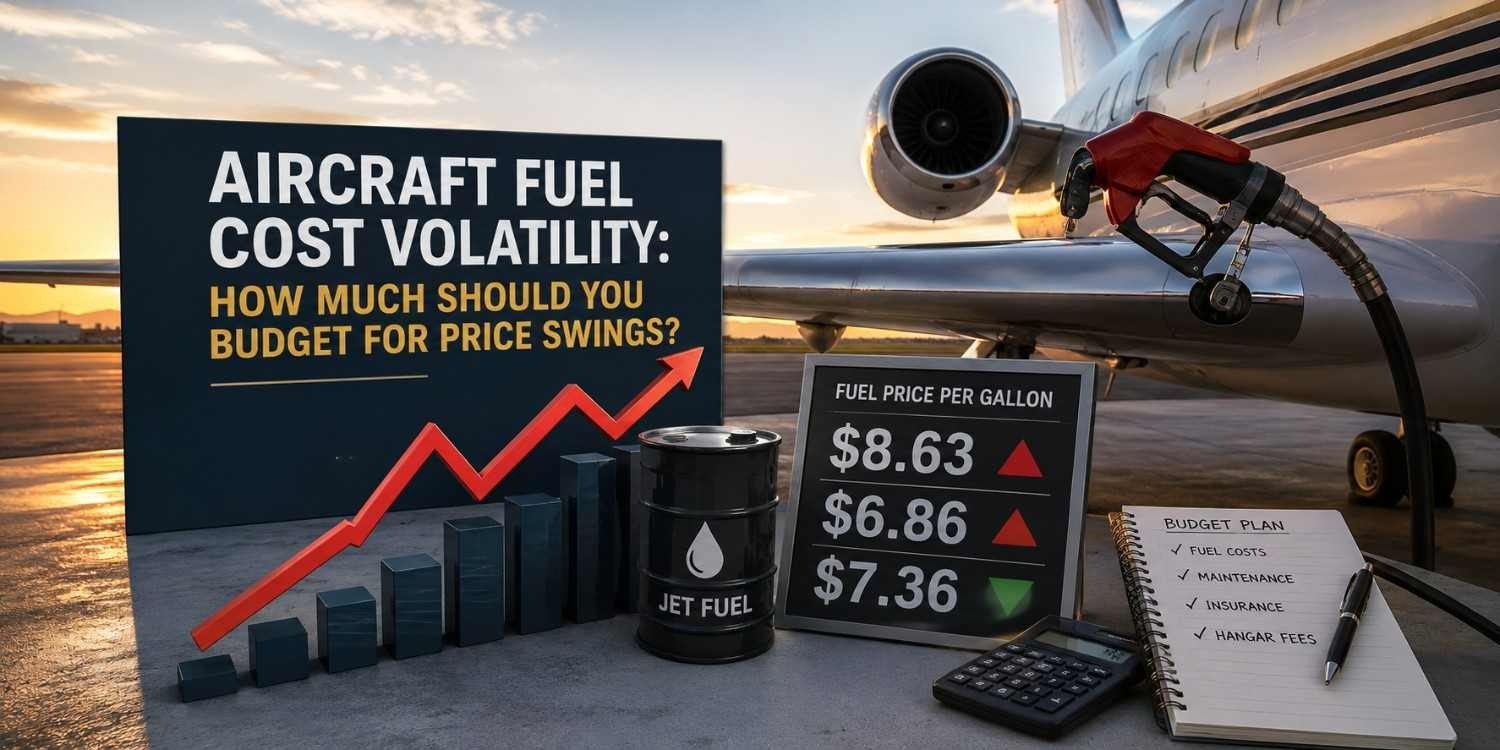
Nationally, Jet-A averaged $6.86 per gallon in March 2026, as in, up from the previous month and up year-over-year.
By April 2026, Jet-A's national average was up to $8.63 per gallon, a $1.77 increase from one month.
Jet-A's average was down a couple of dollars from April 2026 a little and settled at $8.31 per gallon the next month, but still up dramatically from the previous month.
The regional differences also add another level of volatility to the national trend.
The Western region had the highest average price ($9.09 per gallon) in August 2026, while Central, the least expensive region ($7.36), was $1.70 per gallon cheaper depending on where you fuel up.
Piston owners, too, have to pay. National 100LL full-service avgas prices rose from around $6.37 per gallon in January 2026 to $6.80 by March, an increase of almost 6%.
The takeaway isn’t a single number, and those figures will already look dated by the time you finish reading this.
The takeaway is the pattern: sharp swings in a single month are not unusual, they are a regular part of aircraft fuel markets.
How Fuel Burn and Flight Hours Turn Small Swings Into Big Numbers
A price swing that looks small per gallon becomes significant once you multiply it by your aircraft's fuel burn and your annual flight hours.
A turboprop burning 50 to 55 gallons per hour, for example, can see its per-hour fuel cost shift by $60 or more from a single month's price increase.
For an operator flying around 300 hours a year, that kind of price surge can add roughly $18,000 to $20,000 to the annual fuel bill if the higher pricing holds.
Scale that logic to your own aircraft.
A light jet burning 200-plus gallons per hour, or a larger cabin aircraft burning 300-plus, will see the dollar impact of the same percentage swing multiply accordingly.
This is why fuel burn rate matters just as much as the price per gallon when you're trying to understand your exposure — two owners flying the same number of hours can have very different volatility risk depending on what they fly.
Building a Fuel Budget That Can Absorb Volatility
Rather than budgeting off a single snapshot price, a more resilient approach treats fuel cost as a range, not a fixed number.
Use a rolling average, not a spot price.
Pulling the average Jet-A or avgas price over the trailing 12 to 24 months smooths out short-term spikes and gives you a more realistic baseline than whatever the price happens to be the week you're building next year's budget.
Build in a buffer above that baseline.
Given the kind of month-to-month movement seen through 2026 — including a single-month jump of over $1.75 per gallon — a buffer of 15% to 25% above your rolling average is a reasonable starting point for most owners, with turbine operators on the higher end given the larger dollar impact per gallon.
Model your specific aircraft, not a generic average.
Your fuel burn rate, typical mission length, and home region all affect how exposed you are.
An aircraft based in a historically higher-cost region, like the West Coast, needs a wider buffer than one based in a lower-cost region like the Central U.S.
Separate fuel from your other variable costs when tracking spend.
Because fuel moves independently of maintenance reserves, engine programs, and other variable expenses, lumping it into one "variable cost" bucket makes it harder to see when fuel specifically is driving a budget overrun.
Practical Ways to Manage Exposure
Budgeting for volatility is one part of the picture; actively managing it is the other.
Contract fuel programs.
Many owners and operators enroll in contract fuel programs that lock in negotiated pricing at participating FBOs, which can meaningfully reduce exposure to the retail price swings seen at individual airports.
Fuel-efficient routing and tankering decisions.
Where fuel prices differ significantly by region — as they did across the U.S. through 2026 — some operators choose to "tanker" fuel by filling up at a lower-cost airport before a trip rather than fueling at the destination, when weight and range allow for it.
Aircraft selection.
For owners still deciding what to buy, fuel burn rate is a direct multiplier on volatility exposure.
A more fuel-efficient aircraft in the same class doesn't just save money at a stable price — it also reduces how much a price spike costs you in absolute dollars.
Revisit your budget quarterly, not annually.
Given how much movement has occurred within single months in 2026, an annual fuel budget set once and left untouched can drift out of date quickly.
Reviewing it against actual FBO pricing each quarter catches drift before it becomes a year-end surprise.
Where This Fits Into Your Overall Ownership Budget
Fuel is only one piece of the total cost of owning and operating an aircraft, but it's the piece most likely to move without warning.
Getting a realistic range for fuel — rather than a single optimistic number — makes the rest of your ownership budget more reliable, because it removes the variable most likely to throw off your projections.
If you want to see how fuel price assumptions affect the total annual budget for a specific aircraft, AviaCost's operating cost calculators let you adjust fuel burn, hourly rates, and annual flight hours to model your own numbers alongside fixed costs like insurance, hangar, and depreciation — so you can see the full picture, not just the fuel line.