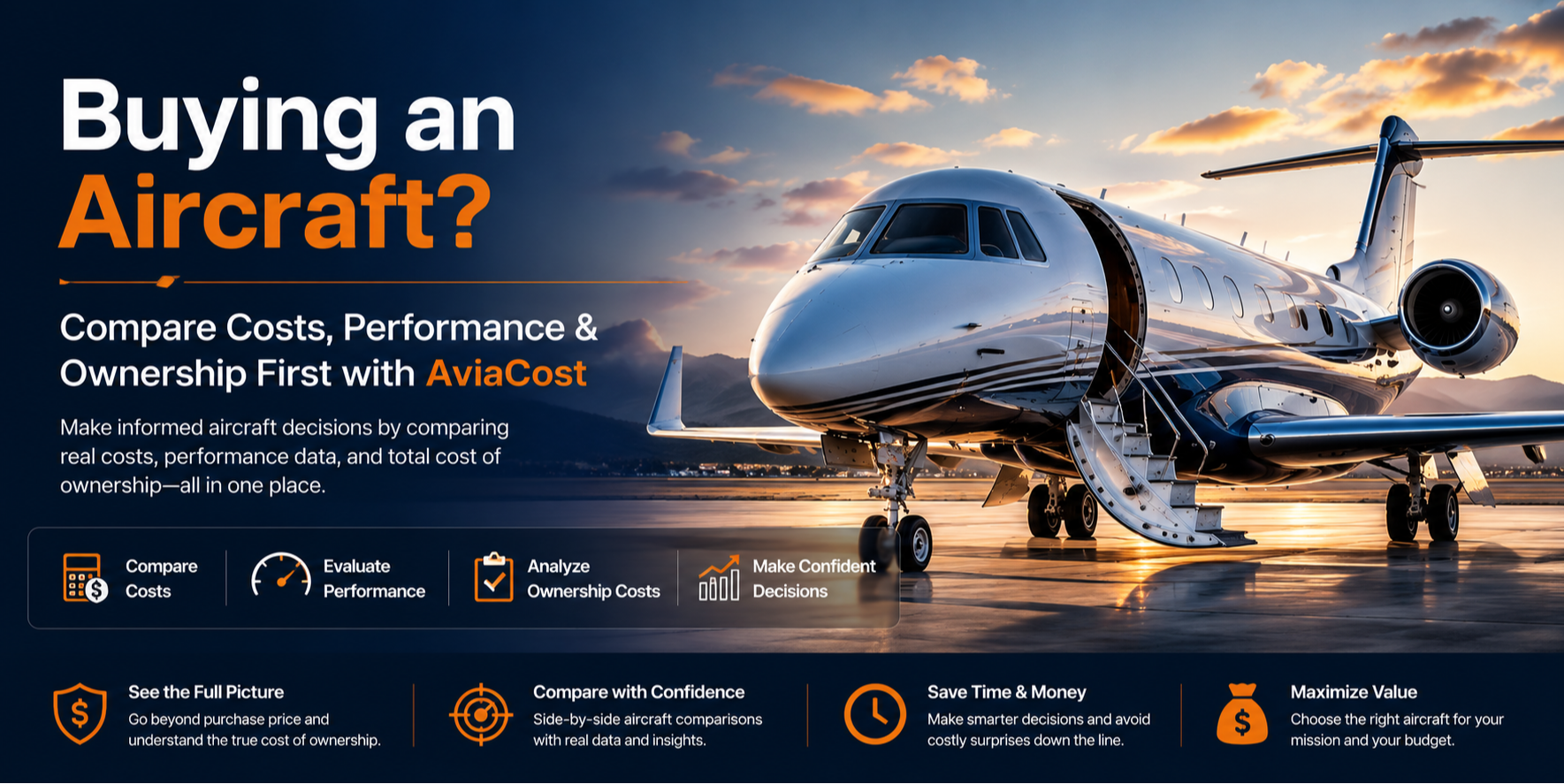
Buying an Aircraft? Compare Costs, Performance & Ownership First with AviaCost
July 8, 2026
For both individual and business buyers, buying an aircraft is one of the biggest financial decisions they will make. Most prospective buyers focus on the purchase price of the aircraft; however, experienced aircraft owners recognize that acquisition costs are only one component of aircraft ownership.
The operating costs associated with the aircraft (annual operating costs, maintenance costs, fuel costs, depreciation, insurance, crew salaries, and utilization of the aircraft) contribute equally to determining whether an aircraft will be a good investment.
Therefore, it is essential for buyers to conduct due diligence in assessing the total cost of ownership of the aircraft before signing a purchase agreement. Buyers should not simply rely on general market estimates or assumptions regarding an aircraft's operating costs; rather, they should utilize an aircraft cost calculator to evaluate multiple aircraft side-by-side based on their actual operating costs and operational performance data.
AviaCost offers buyers the unique opportunity to analyze all available aircraft specifications, actual operating expenses, operational performance data, and total cost of ownership information for several aircraft simultaneously and in one location to facilitate more informed and financially responsible purchases.
Why Comparing Purchase Prices Isn't Enough When Buying an Aircraft
There are various types of jets you can buy. The main types include smaller jets that are intended for short-distance, regional travel up to larger jets that can travel anywhere in the world.
If you're new to the jet market, you may think that two jets of the same price are comparable. However, the amount you will spend on an aircraft each year after its purchase will differ greatly based on the operational cost of the aircraft.
It's common to underestimate how much you're going to spend as you fly an aircraft. There are many things that will add up over time that you'll need to take into account. These include fuel costs, scheduled maintenance, engine reserve accounts, insurances, hangaring, training, navigation fees and maintenance programs.
For example, you could purchase a lower-priced jet and wind up spending more over ten years to operate that lower-priced jet because its operating expense is higher. Conversely, you could purchase a jet that costs a little more to buy but would have lower operating costs, a higher resale value and a greater dispatch reliability.
Knowing and understanding what your long-term financial obligations will be to operate any aircraft will help prevent costly mistakes when making a purchase.
How an Aircraft Cost Calculator Helps Buyers Make Better Decisions
An aircraft cost calculator takes the guesswork out of owning an aircraft. Rather than having to gather all the necessary data from separate sources, buyers can now access the data together in one place along with estimates of operating costs and acquisition costs for the aircraft.
A quality calculator will let buyers assess:
Estimated acquisition costs
Direct operating costs
Hourly operating costs
Annual costs of ownership
Fuel usage
Maintenance reserves
Insurance costs
Performance characteristics
Cabin size
Range and cruise speeds
Buyers will not have just one number to compare, but rather will see a complete picture of what it means to own an aircraft over several years.
This type of comparison is extremely beneficial to charter operators, companies, entrepreneurs, and private individuals who plan on flying frequently and desire predictable budgets for operating their business.
Citation CJ3+ vs Phenom 300E: Which Aircraft Offers Better Value?
Among light jets, the Citations CJ3+ and Phenom 300E are two of the best-known options available today. Both aircraft offer exceptional value in the aviation marketplace but differ somewhat in their operational philosophies as well.
Although ultimately up to the end-user, comparing these aircraft has revealed some essential characteristics that should be evaluated beyond just price when acquiring a new jet for business use.
Purchase Cost
All of these jets operate in the premium light jet market; however, acquisition prices vary based on model year, total airframe hours, maintenance history, avionics upgrades and cabin configuration.
A newer aircraft with complete maintenance history typically will sell for a higher purchase price but may help to reduce future maintenance costs.
Performance Comparison
The Citation CJ3+ is a well-regarded aircraft that provides excellent runway performance, operational capability, and dependability. It excels at airports with shorter runways and is a popular choice with owner-pilots and companies.
The Phenom 300E has great cruise speeds, large range capabilities, and one of the largest interiors available. Therefore, it is an attractive alternative for buyers who want their passengers to be comfortable on extended regional flights.
When comparing aircraft, prospective purchasers must analyze:
Max cruise speed
Max range
Takeoff performance
Payload capacity
Cabin square footage
Baggage weight limit
Fuel economy
The type of mission you are attempting to fill is more imperative than just evaluating the specs of an aircraft. For example, an aircraft built primarily for short regional flights might not be your best option if you constantly fly cross-country.
Ownership Cost Comparison
Fuel costs are only one part of the overall costs associated with owning a plane.
There are recurring expenses to consider, including:
Scheduled maintenance
Engine reserves
Insurance
Hangar storage
Crew expenses
Navigation fees
Annual inspections
These recurring costs will often constitute the majority of total costs, depending on how many hours the plane will fly each year.
Via AviaCost's comparison tools, you can estimate these ongoing expenses prior to purchasing a plane.
Performance Should Match Your Mission
Operational expectations should dictate aircraft acquisition prior to aircraft recognition.
Examples of such include:
Do you routinely make flights that are 300 and/or 2,000 nautical miles?
Will there be four and/or eight passengers in your flight?
Will you routinely use smaller regional airports?
Is your aircraft expected to mainly serve the executive purpose or customer service?
These factors have a considerable effect on finding an aircraft that provides the greatest long term value.
It is best to have at most the number of operating aircraft you need. Excess equipment increases your fuel consumption, overall maintenance costs, and annual operating costs. Limited equipment may restrict your operational capabilities negatively affecting your overall productivity.
Ultimately the right aircraft is one that meets or exceeds your needs and does so in an efficient manner.
Factors That Influence Aircraft Ownership Costs
When purchasing an aircraft, most buyers do not realize the significant difference in the cost of owning the same aircraft type based on how that aircraft is used.
Annual aircraft ownership costs can be impacted by a number of factors including:
Flight Hours
Flight hours affect fixed costs, with a higher annual flight hour usage reducing the average fixed cost per flight hour and increasing the necessity for maintenance scheduling.
Aircraft Age
The purchase prices of older aircraft are usually lower than newer aircraft however the additional cost for inspections, component replacements and modernization can offset the savings of purchasing an older aircraft.
Engine Programs
When an aircraft is enrolled in an engine maintenance program, the owner has an expected cost of maintenance which provides future value (resale).
Fuel Price
Fuel is typically one of the largest expenses incurred while operating an aircraft and it varies greatly due to location and frequency of use.
Maintenance History
Aircraft that have had a good maintenance history will typically provide fewer unexpected expenses for the owner during their period of ownership.
By taking all of the above variables into account and using them in conjunction, a much more defensible financial picture of an aircraft acquisition can be achieved than if simply comparing purchase prices.
Why Aircraft Comparison Matters Before Buying
The first aircraft that the majority of professional buyers look at will not be the one they choose to buy. Instead, they usually will assess multiple aircraft based on applied standards to understand the value over the long term.
A structured method of comparison includes but is not limited to:
Purchase Price
Direct Operating Costs
Annual Ownership Cost
Fuel Burn
Cruise Performance
Cabin Volume
Maximum Range
Maintenance Requirements
Resale Potential
When you go through these steps to buy an aircraft, you are taking the emotion out of the purchase decision and putting the decision into an objective form through a detailed financial analysis and this procedure will help reduce your ownership risk whether you are buying your first aircraft or expanding your current fleet.
Why Buyers Use AviaCost Before Purchasing an Aircraft
The challenge of finding reliable aircraft ownership data stems from the difficulty of accessing multiple sources of information about aircraft performance, ownership costs, and operational expenses.
AviaCost streamlines the process of researching aircraft by providing a single platform where users can review and evaluate aircraft for their purchase based on the same criteria.
By using this one platform rather than going to individual manufacturer brochures, brokerage websites and spreadsheets to compare aircraft with each other, buyers will save time and increase their confidence during the purchase of an aircraft.
Buyers who are considering buying several different airplanes have significantly simplified the buying experience when all of the financial estimates and performance data are available in one place.
What will your aircraft really cost after the purchase? Don't guess—compare ownership costs, operating expenses, and performance with AviaCost before you buy.